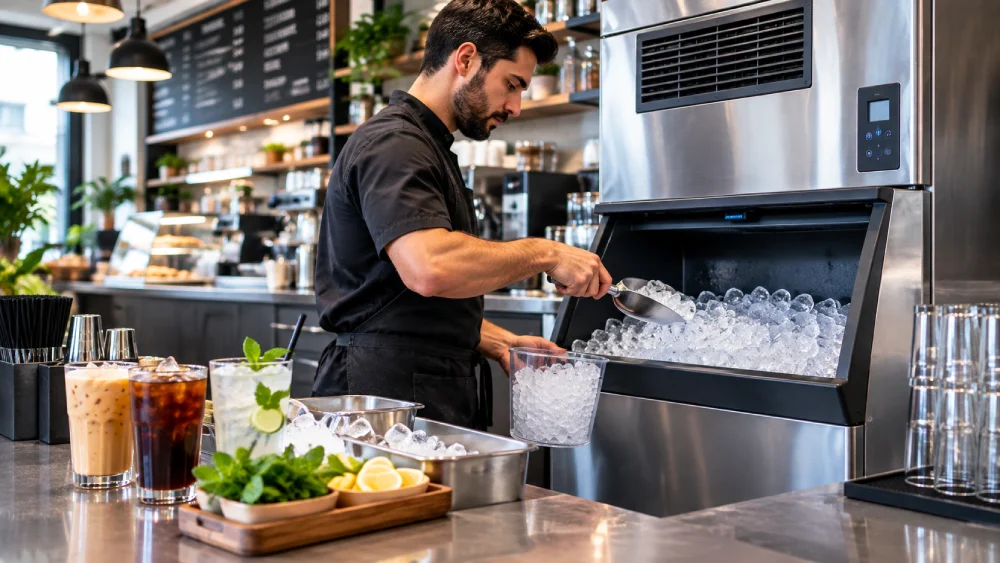
Most cafés buy an ice machine based on floor footprint or a sales brochure number. Six months later the bin is empty by lunch, or the compressor is short-cycling because the unit is oversized for the ambient heat load. Ice capacity is a volume problem first — then a machine problem.
Start from covers, not from kilograms
Work backwards from peak service. A neighbourhood café serving 120 covers a day with iced beverages on half the tickets is a very different load from a QSR with continuous soft drinks. Count:
- Average iced drinks per day (not just peak hour)
- Ice weight per drink (typically 120–180 g for a 12–16 oz cup)
- Kitchen / bar / display use outside the front counter
- A 20–30% buffer for glass chill, blender ice and weekend spikes
Daily kg ≈ drinks × grams per drink ÷ 1000, then add buffer. That figure is your production target at the worst ambient temperature your site sees in summer.
Match the machine to the site
Air-cooled units need clear intake and exhaust. High ambient kitchens or sealed back-of-house rooms cut rated output sharply. If water quality is hard, budget for filtration — scale kills evaporators faster than any other fault we see on Indian sites.
What we recommend next
Share your covers, drink mix and available space. We size Iceboy / Scotsman-class machines to the load and quote storage so you are not draining the bin mid-service.